
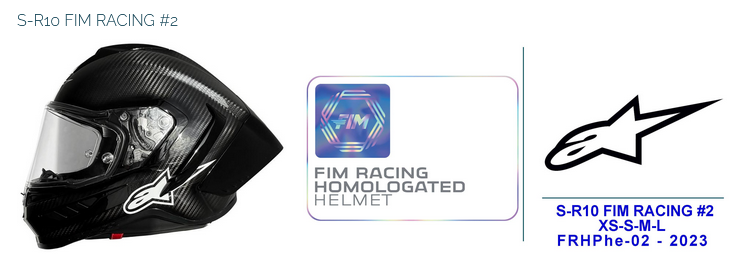
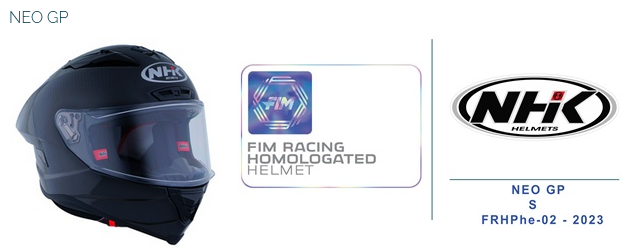
The FIM applauds NHK as it introduces additional FIM homologated helmets and ALPINESTARS for their newly homologated XS and S sizes. These helmet models come with a standard ECE 22-06 certification, plus they have successfully passed all tests of the FIM Helmet Standard FRHPhe-02 that is mandatory in 2026 for FIM championships.
From the outset the aim of the FRHPhe-02 was to improve riders’ head protection in other disciplines. Phase 02 was established, with the collaboration of the helmet manufacturers back in 2022, in order to define a new standard that goes above and beyond the existing ones on the market (e.g., UN ECE 22.06, Snell M2020, JIS T8133), and above the FRHPhe-01. All agreed about the timeline to be mandatory in 2026.
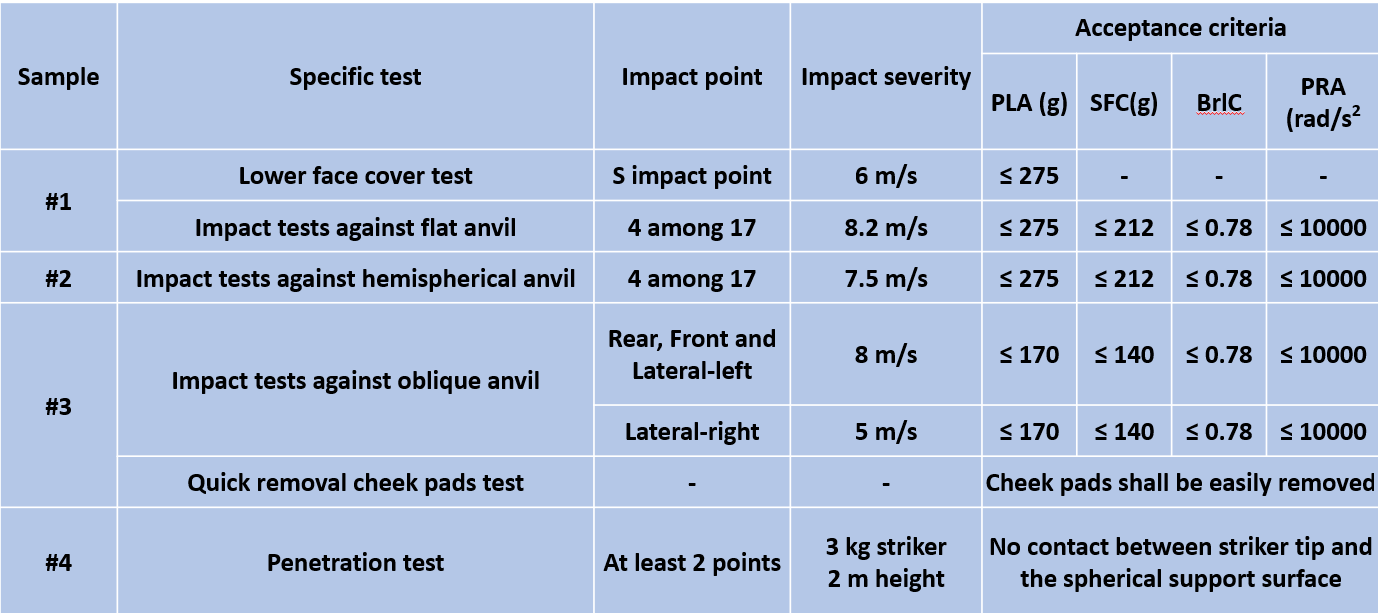
Relative to the standards previously referred to, the FRHPhe-02 standards have undergone an enhanced and more complete evaluation of their performance, in addition to being previously certified as compliant with an international standard. This includes new threshold requirements, new impacts and tests, such as new impact tests against oblique and hemispherical anvils (to measure rotational solicitations generated in impacts), a quick-removal cheek pad test, and the introduction of a Skull Fracture Criterion (SFC).
For a better understanding of the global FRHPhe-02 situation, we would like to provide some explanations. The FIM has one laboratory and this is the only way to ensure the test results of the helmet model are consistent (in terms of repeatability and reproducibility), without any discrepancy, using the same tool and facilities for all helmet manufacturers on top of using a unique testing method.
Some helmet manufacturers introduced the FRHPhe-02 helmet very soon such as ARAI in 2023 for their circuit racing helmet, LS2 and 6D helmets for the off-road racing helmet models, respectively in 2023 and 2024.
2026 is a new milestone for all manufacturers to get the FIM homologation. Many of the helmet manufacturers started the process from September 2025 and applied for the homologation. Some of them asked only for private tests to evaluate their helmet model. Thus, when some manufacturers have tried to pass the new FRHPhe-02 standard with a 2021 or 2022 helmet model, the results are easy to understand. With this new FRHPhe-02 standard, it is impossible to pass the FIM homologation without considering the new FIM requirements, as the international standards never took in account our new requirements to increase the safety of the riders.
How are the FIM tests conducted? First, we need an international standard certificate (ECE, SNELL or JIS), and for each size we test four samples with several impact tests on different RANDOM impact points.
If a manufacturer fails with one helmet model or some sizes, they need to improve the helmet and ask for an extension of the international certification to apply for the FIM homologation. For a new helmet model or an old one, everyone can imagine how much time this comprehensive process can take to achieve the required homologation.
Instead of talking about the FIM/laboratory delays, some manufacturers tried to pass for one year, as a few months ago but they are not yet at the FIM level. When one manufacturer asked in January for the FIM homologation, you can understand that it was too late to complete the testing for the start of the season. There is a detailed planning process to schedule all the tests required by all the manufacturers. If the manufacturer fails, a new shell must be built by the manufacturer, sometimes with additional layers, different EPS densities and afterwards we need to find another slot in the planning to test again. We have had it where we have had to test seven times for a single size of one helmet model, to finally get it to pass.
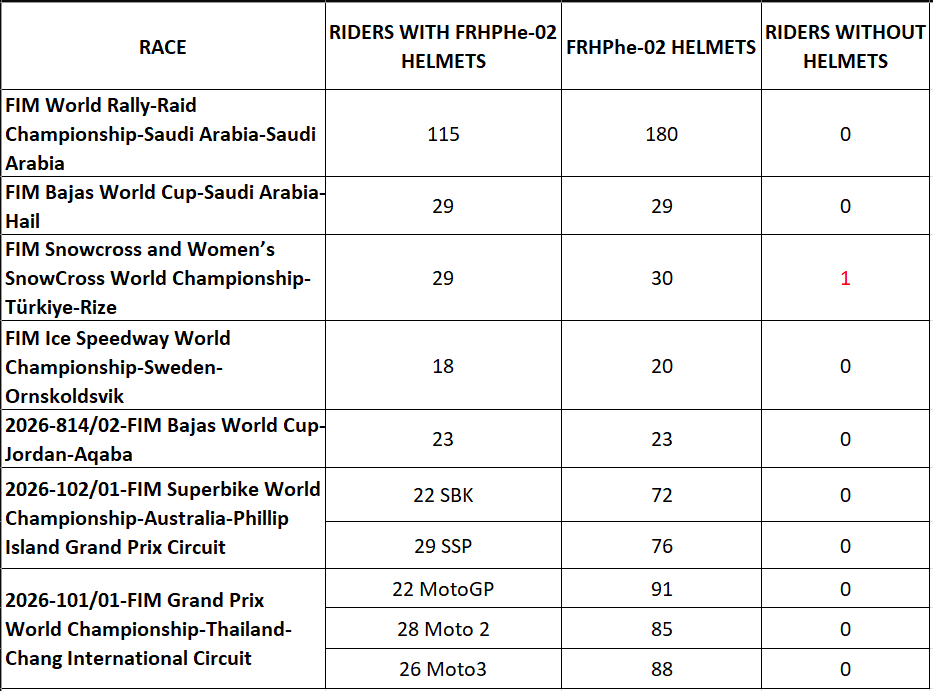
The FIM is very proud about the preparations for the start of the 2026 season because all the riders received their FIM approved helmet model in time for the first races, much thanks to the relevant manufacturers really helping with this process.
The homologation of the FIM helmet models is confirmed by the mandatory presence of the FIM homologation label sewn on the chin strap. In the FRHPhe-02 video, you can learn more about the functionality of this label.
To learn more about phase 02 of the FIM Helmet Homologation Programme watch the video!