2000: Agreement and disagreement over four strokes
* The annual conference took place from 25 to 28 February at the Hotel Crowne Plaza near Geneva airport. The first council session on Friday 25 was opened by the president who welcomed all the members: Vito Ippolito (Deputy president), Jorge Cabezas (vice president in charge of finances), Dieter Junge, Henrik Norgaard, Jorge Viegas and Andrzej Witkowski (vice presidents), Guy Maitre (CEO), Ms Marilynn Bastedo (NAMU president), Ms Beaulah Schoeman (AMU president), Messrs Darryl Hiddle (UOM president), Jean-Pierre Mougin (UEM president), Pedro Venturo (ULM president) and Thongchai Wongsawan (UAM president) and the commission and panel presidents Wolfgang Srb (CMS), Ignacio Verneda (CTR), Renzo Giannini (CCP), Geoff Wilson (CML), Robert Rasor (CMT), Giancarlo Pasini (CIE), Oriol Puig Bulto (CTI), Hans-Robert Kreutz (CMI) and Ms Clotilde Galy (CJI), as well as Messrs Claude Danis (charged with CCR presidency) and Paolo Sesti (charged with the CER presidency) and Mr Inge Blank, representative of the internal auditors.
* The president spoke of the FIM presentation made to MEPs in the context of the Brussels show in January, then a week later the FIM/GPMA meeting in Japan concerning four strokes in GPs. The situation was delicate because this initiative obviously did not suit everyone. A presentation of “Riders for Health” had taken place on 2 February at Alexandra Palace in London in the presence of Princess Anne, the patron of the association, who had publicly recognised the role of the FIM. The centenary book project was first raised at this council. As for endurance, a letter of intention would be signed between the FIM and SBK and meetings were planned with the organisers of the two French classic races.
* Among the modifications to the disciplinary and arbitration code in the case of appeal, the plaintiff had to be present or represented or the complaint would be declared null and the costs would be for the account of the absent party. Still in relation to the changes in GPs, appeals against a stop & go decision and black flag would not be accepted. This was a statement of fact since races could not be rerun and such appeals just wasted time (sic).
* In track racing, two new disciplines were scheduled for 2001. The first was a single race, the speedway youth gold trophy, reserved for youngsters aged between 12 and 16 with 80cc machines, and the second was also a single race run on grass for 125cc, limited to participants aged between 14 and 19. Draft regulations would be presented at the congress.
* It was proposed that the 2000 congress in Portugal should be held under the banner of motorcycling and the environment. A round table would be held on this issue in the framework of the congress.
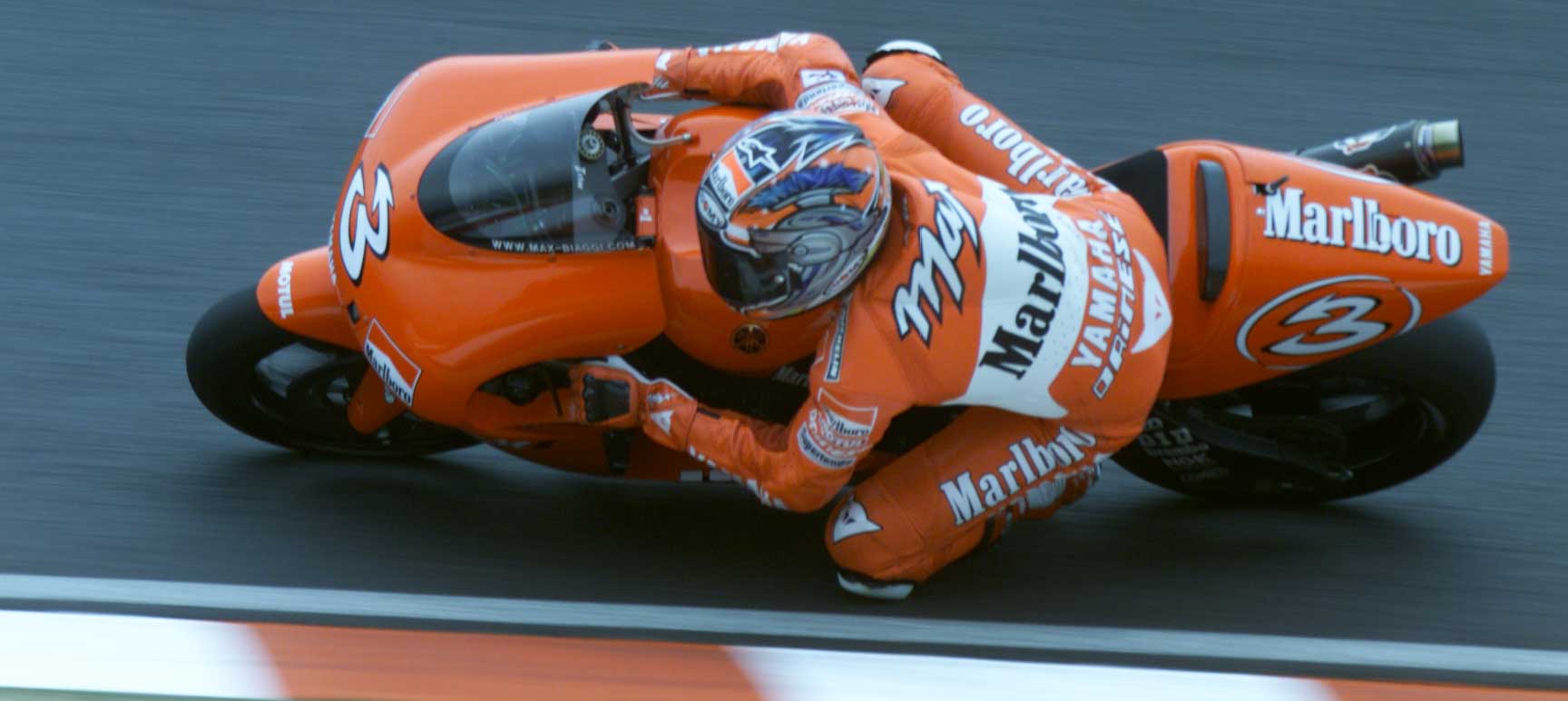
* The June council session was held at the Hotel du Rhone where so many meetings had been held during the presidency of Don Rodil del Valle and Nicolas Schmit. The president informed the council that the principle of introducing 4 stroke engines in the 500cc GP class should be accepted on an experimental basis from 2002 following a request from the manufacturers and the GP commission during a meeting in Catalunya on 8 June. The council gave a mandate to the president to finalise the text for the technical regulations in collaboration with the international technical panel and the GP commission and to fix the date they would come into force. On 9 April a press release was published at Suzuka giving some technical indications on the “exceptions to the technical regulations for the 500cc class valid from 1 January 2002”. Four stroke prototypes would be accepted on an experimental basis in the GP road racing world championship with the following characteristics: maximum capacity 990cc, minimum number of cylinders – 3, minimum weight 135 kg for 3 cylinders, 145 kg for 3 cylinders with oval pistons or 4 and 5 cylinders and 155 kg with 4 cylinder or more with oval pistons or 6 cylinders or more. The fuel tank capacity would be 24 litres in 2002 and 2003 and 22 litres in 2004. If the constructors could guarantee that only prototypes would be used, engines of less than 3 cylinders would also be accepted – at the same minimum weight as the 3 cylinders.
* In spite of the explicit restriction to prototypes, as opposed to production models, the FIM received official complaints from Octagon, owner of SBK International, who were not in agreement with this regulation since it claimed that the contract between the FIM and SBK International excluded the use of 4 stroke machines in GP – which was of course totally wrong. The problem could have come from the fact that Octagon used lawyers from countries where everything was settled in a court of law. The FIM was therefore called before the arbitration sports tribunal in Lausanne to defend its rights.
* Then just one single phrase in the minutes covers what would be a major change in the modern era for the FIM: the take-over of Action Group by Dorna Promocion del Deporte. Dorna thus took control of the three world championships for individual motocross, the motocross of Nations and the supercross. The press release was dated 4 June and mentions the simple purchase of a part of Action Group by Dorna with Action Group remaining responsible for the motocross championships. Then came the announcement of the change in format for 2001 with the three classes remaining but with only one race per class per event (six races in one day were an enormous problem).
* In the Czech Republic, the ACCR requested the FIM to replace the CMF (the federation currently affiliated). The Czech government no longer accepted the situation and was threatening to suspend subsidies paid to the CMF. The FIM had received a letter from the sports ministry recommending that the ACCR be accepted as the national federation.
* In motocross, all the tracks where an individual “motocross GP” would be organised in future had to be inspected again by the CMS and Action Group. The accent was being placed on a greatly improved infrastructure. From 2001 there would only be one race per class (125, 250 and 500cc) all taking place on Sunday.
* In trial, the industry was beginning to become anxious about the new European norms on exhausts which were extremely restrictive and difficult to apply.
* In enduro the project to simplify the discipline and facilitate understanding (especially for the TV audience) was discussed. In agreement with industry, the idea was raised of reducing the number of classes to the same as motocross (125, 250 and 500cc and the equivalent 4 strokes). A meeting would be organised between the CER and the cross country rally organisers.
* The organisation of an environment round table at the next congress was discussed as well as the application of sanctions against the organisers who did not respect the environmental code.
* The medical panel president presented the new anti-doping code which included all the questions concerning anti-doping in the medical code for a separate booklet in an attempt to bring the FIM in line with other federations and especially give more weight to the fight against doping.
* During a meeting with the superbike manufacturers in Misano, the CTI president explained that the constructors had accepted the proposal from the promoter Superbike International to defer for a year the introduction of the new 2001 regulations: some constructors were not ready to supply the kits required. The council gave its approval.
* In Asia two tourism events were scheduled, one in Mongolia and the other between North and South Korea. An offer from trial manufacturers had been made to the continental unions in Asia, Africa, Oceania, Latin America and North America, to help development of this discipline.
* On the question of four strokes in GP, the sports tribunal had recently rejected Octagon who were trying to stop the FIM from immediately implementing the technical regulations for this step.
* A meeting was held with the constructors at the Eight Hours of Suzuka “with the aim of laying the first stone to create a new structure uniting the constructors taking part in the different world championships organised under the aegis of the FIM”.
* The executive board confirmed the agreement in principle to cede the rights for the ice racing world championship GPs to the company Benfield Sports International (BFI) from 2002 and an agreement had been reached for the speedway team world championship (which would be renamed as the speedway world cup).
* Following the bankruptcy of the software company responsible for the FIM integrated management system, the programme no longer offered any guarantees and investment in a new system was necessary. In addition the FIM network had been showing signs of saturation for some time now and was under-sized concerning the tasks. The executive secretariat asked for an immediate budget to replace the network and invest in programmes. The executive board gave its approval.
* A pre-pension plan was progressively being put in place for FIM staff with ten years of service or more. The executive board gave its approval for the foundation of a pension fund to manage pre-pensions according to article 14.1.7 and 14.2.2 of the statutes.
* The financial director also informed the executive board of the investment necessary to construct the car park on the land adjacent to the building. Taking into account the size of the cost and the uncertainty of how long this work would take – the land was intended to extend the building – some work was left aside in favour of a “simple” car park.
* After the first biennial session in 1999, it was the turn of the congress organised in the Algarve in sunny southern Portugal at Vilamoura, a holiday resort west of Faro.
* During the council’s first session, the president explained that Octagon had decided to abandon the court case concerning 4 strokes following the TAS’s rebuttal and a collaboration agreement had been signed between Dorna and Octagon. This agreement contained the following points: the current technical regulations for superbike would be maintained until 2003. Subsequent modifications could be made with the expressed agreement of the FIM, the constructors and SBK; the definition of prototypes would be included in the FIM technical regulations; the management of the world superbike championship would be similar to that in GP. The contract between the FIM and SBK would be extended until 2011. Starting in 2007, the sums paid to the FIM would increase annually according to a percentage to be determined taking into account the inflation of the Euro. SBK would pay the FIM annual amounts relating to the side-car world championship. Concerning endurance, a contract would be signed between Octagon Motorsports and the FIM. From 2002 onwards, the organisers of the four classic events had to accept the demands presented at the management council if they wished to be part of the world championship.
* The president had met the IOC president, Juan Antonio Samaranch, at the Catalunya circuit during the GP. Mr Samaranch had stated he was “satisfied with the work accomplished by the FIM in terms of safety and the fight against doping”.
* The Court of Arbitration for Sports CAS had given its verdict in the Haga affair. The director general believed that “the outcome of this affair is positive for the FIM in terms of the values it defends and the FIM bodies which gave good and solid solutions”. The TAS decision still left food for thought since it only removed points for one race while all world superbike events had two races (how could you justify that a banned substance only affected one race and not the other on the same day?) In some details, it also gave the impression that the TAS judges had not read the TIA decision. In any case this decision would force the FIM to modify its disciplinary and arbitration code. The recruitment of a jurist at the FIM seemed necessary in the short term in order to examine among other things the laws the federation established and their conformity with its other sporting regulations.
* The revision of the sporting code would take place in 2001. The construction of the car park at the FIM had begun in early October and would be finished end November. At the Intermot 2000 show in Munich, the FIM and the DMSB had shared a stand giving good visibility.
* Ms Andrea Coleman from “Riders for Health”, would make a presentation to the general assembly on the last day of the congress. It was proposed that 50% of fines imposed on riders in 2000 (except in GP) would be given to this association.
* Upon the proposal of the director general, the council accepted that an FIM sub-calendar for world records should be created. Registration costs would include the costs of the technical delegate present at the attempt.
* When the general assembly was opened on Monday morning, 55 federations and a specialised association were present. The presidents of the continental unions presented their reports: the UEM according to Mr Mougin had increased the number of events counting for the European championship by 25% in comparison with 1999. The number of FIM licences was on the increase and all the disciplines were moving forward.
* In Africa, the CONU president, Ms Schoeman, explained that for the first time, continental championships had taken place for motocross, junior motocross and enduro thanks to FIM support. The major problem was the cost of transporting the machines, customs duties and costs relative to documentation. Angola had become a member of the AMU.
* In Latin America, continental championships were organised in road racing, motocross, supercross, enduro and trial as well as two ULM motocross 500 and 80cc cups. The ULM was working to create and develop non sporting commissions (medical, legal, leisure).
* Three new federations were accepted as members: Sri Lanka, Zimbabwe and Namibia.
* The world endurance championship – as well as the FIM endurance cup – became the championship for teams (no longer for riders) and manufacturers. The trial indoor world cup was upgraded into a world championship. An event was only considered finished after all complaints and appeals had been lodged and when the complaints and appeals had been decided upon. The following sanctions were added to the disciplinary and arbitration code: elimination of times, stop & go procedure. Anyone believing himself to be disadvantaged by a decision could appeal except for a stop & go and a black flag. The amount of the guarantee for road races (CHF 1,000) was included in the code. The principle of a hearing taking place by conference call or any other means of communication, whether by telephone or electronically, was accepted. In the case of a hearing the plaintiff had to be present or duly represented or the appeal would be declared null and the costs would be for the absent party.
* Concerning the project for the snowmobile world championship, contacts had been made with the American association of snowmobiles. A response had been promised but never came. Although the American and Canadian markets were bigger than those in Europe, it was decided to create the FIM world snowmobile championship. The aim was that once the championship was in place, the constructors would understand the commercial value of a world title. In 2001, there would be two events, but the council, after discussion, decided that this championship should be launched as a world cup.
* A 125 class was added to the FIM junior motocross cup (80cc).
* The CMT recalled that the sessions of the commission in February 2001 would take place in Orlando (Florida) where the international conference on motorcycle safety would take place under the banner “the human element”. The 3rd conference on public affairs would also take place in the United States near the AMA offices in Columbus in April.
* Concerning the environment, the main activity was the round table organised in the context of the Vilamoura congress. Several specialists took the floor and emphasised the importance of the environment in motorcycle racing and in everyday life. The environmental code was still being tweaked especially concerning the protection of land used for a sporting event (in particular off road).
* The technical panel suggested that for 1.1.2003 equivalent classes in motocross and enduro should come into force with two stroke and four stroke together at the same level with different engine capacities. The current trend in increasing the use of four stroke engines had to be observed since they also found favour with authorities and governments of numerous countries as opposed to two strokes (even though the advantage of the four stroke was not totally proven, as research into two strokes indicated).
* The medical panel welcomed the management council decision to bring into force the first anti-doping code on 1 November 2000. It was also decided that the FIM should be informed by the FMNs of the results of all drugs and alcohol testing. The FIM should also be immediately informed of any sanction imposed on a rider as a result of a positive test. The FIM would then inform all the national federations of any rider subject to a sanction due a positive result.
* The chief executive officer announced that the panel of judges had met at the FIM offices on 8 December to analyse the consequences of the Haga case on the federation’s jurisdiction. This meeting had also enabled explanations to be given to the panel as to why a proposal aimed at eliminating FIM jurisdiction had been made – more precisely in the GP regulations. The CEO informed the executive board that Mr Robert Hofstetter had been hired as jurist.
2001: The sporting code is rejected
* The first management council meeting of the third millennium met as usual at the hotel Crowne Plaza on 23 February. The president emphasised that the prize giving ceremony for FIM world champions had gone very well in the rooms in Monaco. All the champions had appeared with the exception of Kenny Roberts who had got married the day before and who appeared via video link. The French actress Emmanuelle Béart was present at the presidential table. The year 2000 had been excellent and deserved to be celebrated, which was the case.
* Another problem which had been going on for three years now was the situation in the Czech Republic. The ministry for youth and sport had after the Vilamoura congress once again clearly recommended membership of the ACCR as the affiliated FIM member in its country. After discussion, the council decided to accept the ACCR with immediate effect as the FIM member and to exclude the CMF.
* The president reminded the meeting of the situation and current length of contracts signed with the different promoters. In an attempt to enable the FIM to establish long term aid and development programmes in the interests of the FMNs, it was also necessary to guarantee long term income for the FIM.
* Then the director general explained that the FIM was drawing up a membership file for the IWGA (International World Games Association). This association was considered a spring board for non Olympic disciplines to gain access to the games. Every four years it organised the world games which would take place in Duisburg (Germany) in 2005. The FIM objective was to enter one or several motorcycling disciplines.
* Two requests for membership were underway: Iceland and Egypt (both ex-FIM members).
* Ms Galy came back to the TAS judgement in the Haga affair, since the TAS had at no time referred to the judgements made by the FIM legal bodies. She was also furious with some erroneous statements made by the TAS concerning the right to defence for the plaintiff, to which the CDI had allegedly not paid heed.
* The management council met on 23 and 24 June. The situation in Russia was complicated, as two federations were co-existing and were fighting over motorcycling representation. One of them had as president former world motocross champion Guennady Moisseev while the other, dissident one had been formed by ex-president Yarovoi.
* In the expectation that the world anti-doping agency would standardise regulations and sanctions, the IOC was discouraging international federations from taking initiatives concerning doping occurrences. The FIM could take part in the world games in 2005. However, participation in the Olympic Games seemed more and more unlikely.
* The contracts with Dorna and Dorna Off-road had been extended and modified according to the requests of the working group. The negotiations with Octagon and BSI were still underway.
* Talking of finance, for the first time in the history of the FIM a long term financial plan had been established which was an undeniable sign of financial solidity. In agreement with Dorna Off-Road, the FIM had decided not to organise the supercross world championship in 2001 since the conditions for the efficient organisation were not in place for a championship of this size.
* The prize giving ceremony in 2001 would take place in St Vincent in the Val d’Aosta (Italy) which would mean that the “Winter Week” would be organised at the same place.
* Following a request from industry, the FIM had agreed not to change the current world enduro championship classes before 2004 with the introduction of new classes only in 2005. On the other hand, the 400cc 4 stroke class would be modified (300 and 450cc). The FIM had accepted not to limit the number of participants. The revision of the sporting code was underway and the documents would be sent for comments to the council and the NMFs, then the final text would be developed for presentation at the general assembly. Concerning the conference meetings, it would take place over three days instead of four.
* Some modifications were being made to the FIM buildings in order to increase working space. Then there was talk of the federation’s centenary with a project to publish a large book on the FIM’s activities over the last 100 years, the development of the sport of motorcycling and industry. Two large format editions would be produced, one artistic and one a luxury version in two languages (English/French).
* The president wanted to start work on the second FIM building in 2004 which could also include a motorcycling museum.
* The FIM had been approached by the International motonautic union for possible introduction of an single annual event for national teams in motor sport (motonautic, automobile and motorcycling).
* In enduro, the proposal from riders that two of their number should be nominated for reconnaissance of the track before the start of the event turned out to be excellent.
* CML president, Mr Wilson, recounted his trip to China where the national federation wanted to develop tourism potential for motorcycling.
* Mr Pasini, president of the environment commission presented the project “world responsibility and commitment for nature”, a long term task for the commission. It was a case of creating awareness of the FIM commitments on environmental issues by obtaining an external label of quality. The financial investment was sizeable with considerable human resources. The council approved this project.
* The second FIM biennial session was held in Annecy from 17 to 20 October 2001 at the Hotel Imperial on the banks of the lake.
* It was necessary to define the FIM’s stance on environmental issues, with the list of disciplines requiring the most attention and the tools enabling the objectives to be met and media coverage to be gained.
* Mr Giuseppe Luongo, Dorna Off-Road vice president and partner for motocross and supercross, announced that Dorna Off-Road intended to organise training courses for motocross riders in various countries in accordance with the FMNs and the continental unions concerned.
* Mr Eric Sévenet, chief executive officer of Youthstream Action Events, explained that the company, totally independent from Dorna Off-Road, was a candidate for the rights for supermotard and snowmobile. They wanted to develop a supermotard world championship from 2002 onwards with quality races and a good rider line-up. He wanted to do the same with the snowmobile world cup.
* Mr John Postlethwaite, chief executive officer of Benfield Sports International, the partner for speedway, presented the results obtained since the beginning of the partnership and future projects (up to ten events on the 2002 calendar).
* The president announced that the negotiations to renew the superbike, side-car and endurance contracts had been finalised and that these contracts had been signed with the same expiry date as the contract concluded with Dorna.
* The chief executive officer announced that the negotiations with IGWA concerning the participation of the FIM in the 2005 world games were underway.
* When the general assembly was opened, 53 federations and 2 specialised associations were present. The federations of Cyprus and Kenya were accepted as FIM members.
* Everything seemed to be going well but a thunderbolt would wake everyone up – the revision of the sporting code. The chief executive officer took the floor and informed the assembly of the collective work undertaken to draw up the code. The aim was to bring the FIM legal texts into line with each other but also with the commercial contracts signed by the FIM over the last ten years.
* The assault came from the AMA. If the revised sporting code was accepted as it was, it would be in conflict with the AMA statutes (sic). One of the main problems was the reference to “permanent boards” – formed by the FIM president and the president of the promotion company with a contract with the FIM – under the argument that this body was not mentioned in the statutes. Finally the authority to effect changes to the sporting code had been transferred to the management council and the AMA believed that the general assembly should retain this right. It requested that the decision be deferred and the task force (sic) be given the task of continuing the work on the sporting code and its annexes “taking the necessary time to produce a satisfactory text”.
* The president reminded the general assembly that the rights to draw up the GP calendar had been ceded to Dorna by the 1992 contract. He emphasised that the general assembly had subsequently given its approval to all the contracts signed with the promoters and then agreed that they should be standardised. He stated that “whatever happens, the contracts signed by the FIM must in any case be respected”. But that was not enough. By 49 votes to 41 the general assembly refused the revised sporting code. The task force would have to continue its work.
2002 The president is re-elected
* The management council met on 22 and 24 February at the Crowne Plaza in Geneva. The prize-giving ceremony in St Vincent had taken place “satisfactorily” apart from very bad weather conditions in Northern Italy which had delayed many flights. Riders arriving at the Belvedere casino only just had the time to don their dinner jackets before the ceremony began!
* The contracts with Dorna Off-Road (motocross, supercross and motocross of nations) and Octagon (superbike and supersport) were renewed until 2021. The contract with Youthstream had been signed for a period of three years renewable for the same amount of time. As for the speedway promoters, BSI, they were encountering difficulties with certain FMNs who were demanding large sums to organise a GP in their country.
* Dorna Off-Road had also signed a contract with an American company “Clear Channel Entertainment” which was also the promoter of the national American Supercross championship. The dates of this championship would therefore also become world championship rounds (with the exception of one) and two dates in Europe were added for December before the United States series, which traditionally began at the start of January.
* The world endurance championship had lost the three 24 hour classics – no agreement found with Octagon – who had decided to join together to organise a series of events called the “Masters of Endurance” without the approval of the FIM and in conflict with the sporting code. This “Masters” could certainly take place, but could not be run under the aegis of the FIM nor a national federation. The participants could not receive a licence issued by the FIM nor a national federation. Mr Mougin explained that these organisers had not reached an agreement with the FIM contractual partner, Octagon Motorsports, and that the three organisers concerned, who had largely contributed to the notoriety of endurance, were logically demanding some recognition of what they had done. They believed that introducing a series of three events was not incompatible with the development of the championship, since these three “classics” would continue to give the discipline a strong image, attracting new riders who might enter the world championship. It was noted that the FIM should proceed cautiously in this matter taking into account the position confirmed recently by the European Commission on the subject of Formula 1 in terms of free competition. The case would effectively end up in Brussels…
* Then the president announced that he would be standing for re-election at the next congress in Prague.
* Concerning the FIM’s application to become a member of the international association of world games (IWGA) the response had come back in the negative. However, the German organiser was very interested by indoor trial.
* The ACU management council confirmed the withdrawal of Geoff Wilson’s mandate. He was therefore no longer CML president. The working group to revise the sporting code had met after the biennial session to modify certain points and to include a precise definition of the bodies “permanent board” and “Grand Prix commission” which only intervened in the context of championships where there was a contract with a promoter. However the sporting code was applied mainly to international events and championships which did not have a signed contract between the FIM and a promoter.
* In road racing the issue of the noise level was once again raised for GPs due to the introduction of the four strokes. A meeting was to be held at Suzuka during the first GP with these machines in action.
* The supercross calendar was causing a stir. The AMA was not really satisfied to see its national championship become a world championship. The president announced that the “FIM is not against the principle of finding a means to collaborate with the AMA, but not to the detriment of the FIM world championship which is the property of all the FMNs.” In future the FIM wanted to add several events outside the United States. In fact the United States was the only country where supercross had really developed to a high level. The CMS president Mr Srb asked for additional budgets for the jury and FIM event director for the SuperMoto world championship as well as an FIM race director for the supercross world championship. The CMS had changed the motocross of nations in to the “Motocross of Nations”.
* In trial, Mr Verneda stated that the CTR had made a step towards the future by approving the introduction of four stroke engines from 2005 onwards.
* On 22 and 23 June, president Zerbi was only present on the morning of the first day; he had to leave Geneva for Bulgaria accompanied by CMS president, Mr Wolfgang Srb, to attend the first event in the motocross world championship in this country and to meet the Prime Minister (and ex king) of Bulgaria Simeon of Saxe-Cobourg. He would be replaced during the two days by first vice president Vito Ippolito. The president congratulated Mr Cabezas San Simon for his recent election to the executive committee of the Spanish Olympic committee.
* The president read out his draft legislative account and the management council’s annual report which was approved with a few modifications concerning the necessary revision of the sporting code and the importance that the council gave to the environment, its protection and the efforts which the FIM must make in this field.
* The AMA had asked for a consultative opinion from the TAC (tribunal of arbitration and consultation) concerning the application of FIM regulations.
* The president commented on the track invasion at Mugello and his open letter published on the subject. He emphasised the great danger inherent in invading the track when the riders are still riding on it and insisted that safety regulations must be respected.
* The management council appointed the presidents of the commissions and panels for a new mandate of four years (2002-2006) and after discussion, the commission and panel members were also chosen on condition that they would be confirmed by the new management council elected in Prague. Mr Robert Rasor announced he had decided to resign as president of the CMT. He recommended the management council to appoint Mr Achilles Damen (as his successor) and Mr Ed Moreland (AMA) as a new member. The president asked Mr Rasor to stay in his post until the congress.
* The revision of the disciplinary and arbitration code included modifications concerning the international jury’s jurisdiction - only during the event. Only the disciplinary and arbitration bodies could issue sanctions. The commissions and their boards, the management council and the executive board could defer to the CDI but could not sanction and the cases of drugs and illegal fuel would be deferred to the CDI. A sanction was no longer automatically suspended during the appeal process. At the request of the person appealing, the appeal body could take this measure if circumstances so required. After the FIM bodies, the last recourse remained the Court for Arbitration in Sports (CAS) in Lausanne (Switzerland).
* During the year some races had been cancelled for unusual reasons. The epidemic of foot and mouth disease in England caused the first ever cancellation of the Isle of Man TT in its history. Pig fever was behind the cancellation of the Luxembourg round of the motocross world championship. The snowmobile world championship in St Petersburg was cancelled for unfavourable weather. It was too hot and the snow had melted! Finally the authorities of Courchevel (France) had decided to cancel another round in the snowmobile world championship which was having trouble moving out of Scandinavia!
* The FIM had taken out a new insurance policy for civil liability and the premium had doubled over that of last year. The increase was due to the hardening of the international insurance market as a consequence of increased geo-political risks. The financial markets had been low for several months and the exchange rate for the American dollar was very weak which would clearly affect the profit forecast for 2002.
* In road racing a project for a trophy for historic bikes was presented to the council. The title, in agreement with contractual partners would be “FIM World Classic Series”. Mr Danis also announced that the superbike commission which had met in Silverstone on 24 May had decided to modify the technical regulations and authorise 4 cylinder machines with 1000 cc equipped with air restrictors from 2003 onwards. The regulation for kits decided in 1998 had never been applied.
* In trial, the creation of a permanent trial school for the following winter had been decided between the CTR and Octagon/Esedo, with the objective of improving the promotion of the discipline in new countries, improving the level of riding and attracting new competitors. For female trial, the objective was to increase the presence of women in the sport. Courses were beginning to be organised. An indoor trial of nations would be organised from 2003.
* The enduro and off-road rallies commission confirmed its wish to reduce the number of classes from five to three for the individual enduro world championship. The final motocross and trial tests had been made during the Italian round but several opinions differed concerning this change which would take the character away from enduro.
* In track racing, the gold grass track trophy was having trouble because of the minimum age, which was too high according to CCP president Mr Giannini. The council accepted the proposal to fix the limits at minimum 12, maximum 16. The CCP was interested in a new side-car class with 4 cylinder 1000cc engines popular in Anglo Saxon countries particularly Australia.
* Mr Piet Stevens (who had succeeded Mr Geoff Wilson as CML president) announced that a study of the economic impact of the FIM 2002 rally in Denmark would be conducted to analyse the results of such an event.
* Mr Rasor noted that Asia was currently the largest expanding market in the world for motorcycling and proposed to the continental union president Prince Tunku Mudzaffer, to collaborate with the CMT on motorcycle safety.
* The congress was held in Prague in the Czech Republic from 13 to 19 October. The city and the country had recently suffered severe flooding and the damage was still visible.
* The first council session took place on Sunday 13 October.
* The motocross of nations organised by Dorna Off-Road was scheduled for the United States in September. A few days before, the American department of the interior had decreed that this event was illegal and that the track should be closed. Mr Rasor (president of the CMT but also president of the AMA) explained that a precise report would be presented to the management council on the true reasons for this cancellation which had caused a great deal of damage to the FIM and the AMA. He believed that a member of the AMA had been unjustly treated in the communication relating to this affair. If necessary he would request that a commission of enquiry be set up. The president considered that the management council had no reason to doubt the report of the CMS president and that if he desired a commission of enquiry to be opened, he should be make a written request to the chief executive officer during the congress. The motocross of nations had been postponed until 20 October forcing several people to leave the congress before the end.
* A request for recognition had been submitted by the association of trial constructors (Beta, GasGas, Honda, Montesa, Scorpa, Sherco and Yamaha) all present in the world championship. A framework agreement had to be signed with the FIM.
* A new request to organise the endurance events “Masters of Endurance” had been presented by the French federation. The management council had not given its approval to the 2002 edition and believed it had already ceded the exclusive rights to organise and promote the FIM world championship to a promoter. It could not therefore recognise a series in the same discipline. These events had to be registered in the FIM calendar as individual international events. The management council in no way opposed the running of this series as long as it did not take place under the aegis of the FIM or one of its national federation members.
* The working group from the FIM secretariat for the centenary had met and proposed a series of ideas, outlined by the chief executive officer: special medal embossed with the same design used on the centenary book from the work by Italian sculptor Canevari. A logo would be created from this design and would appear on all sorts of objects and souvenirs (pens, pins, ties, caps, watches, letterhead, etc). A 2004 commemorative calendar would be produced, a virtual museum would be placed on the FIM web site, a commemorative exhibition would be held at the Olympic museum in Lausanne, followed by a touring exhibition. Theme talks would be held during the 2004 congress. A theme would be given to the 2004 congress in Paris which would be taken up by the continental unions throughout 2004. An event like “Grand Prix Legend” would be organised. All living world champions from all the disciplines would be invited to the 2004 prize giving ceremony to close the centenary year on a high. Finally a donation of a sum equivalent to that spent to commemorate the centenary would be given to charity. The president mentioned that he had received a proposal from the Corsican motorcycle club to organise in Corsica 10 days of events in all kinds of disciplines to commemorate the FIM centenary. The same proposal had been made by a sports marketing company.
* During the opening session of the general assembly, the president thanked the minister of sports for the Czech Republic for his welcome address.
* In total, 77 federations were present during this congress, a record attendance (73 during the opening session). The general assembly unanimously approved the 2001 accounts as well as the financial reports submitted. Three new federations were admitted: El Salvador, Panama and Qatar.
* Then came the moment for the elections. Mr Francesco Zerbi was re-elected president with 109 votes (there was no other candidate). Messrs Vito Ippolito and Ted Bartlett were elected vice presidents in the first round, Mr Jean-Pierre Mougin in the second round (three of the six vice presidents were elected or re-elected every two years, alternately).
* Then came the subject of the revised sporting code. Although Mr Jacob Douglas was a member of the extended working group, the Swedish federation still presented some proposed amendments - which could not be taken into account - because it felt that there were still some important points which needed modifying. The Swedish and American federations (SVEMO and AMA) recommended the general assembly to reject the sporting code. The Norwegian delegate requested a secret ballot. Out of 132 votes declared valid (required majority 67), the “for’s” obtained 68 votes and the “against’s” 64. The sporting code was therefore declared approved – but only just.
* Ms Andrea Coleman, the director of the humanitarian association “Riders for Health” presented to the general assembly the activities conducted by the federation and thanked the FIM for its help. The president confirmed the continuation of the financial aid from the federation.
* In road racing, there was a change in the length of riding and rest periods for Endurance. In motocross, the names of the classes would be modified, the 250cc would become the “Motocross GP”, the 125cc would become the 125 and the 500cc class would become the 650. Concerning enduro, Mr Michelotti explained that the CER was working towards changing the philosophy in the discipline. The new regulations admitted riders purely on the basis of sporting merit. The number of classes would be reduced from five to three in 2004. The 400 four stroke class would move to 450cc in 2003. Since the regulations were very restrictive a lot of work had to be done to make them more applicable for all parties concerned. A special test called “extreme test” would be added, to arouse the interest of the general public and the press. Mr Damen the CMT president announced that after a study with EPPA concerning the legislators’ proposals, the assessment had been made that the next regulations in the field of emissions would have an effect on enduro. The dates when these regulations would come into force were not yet known, but a memorandum would be sent to the secretariat to be studied by the CER and the CTI.
2003: Almost there
* The annual conference took place from 21 to 23 February at the Crowne Plaza. Mr Lincoln Duarte (Brazil) had been elected new president of the Latin American union and was replacing Mr Pedro Venturo as the ULM representative within the council.
* Bets on the world championships could finally be launched in Italy thanks to a government decree. An agreement in principle was being discussed to offer bets alternating with the Formula 1. The company Sisal was to launch the game for the occasion of the superbike world championship round in Phillip Island (Australia).
* Negotiations were under way with Dorna Off-Road for the restitution of the motocross/motocross of Nations world championship rights. The proposal was that the FIM would extend the road racing GP contract by five years. The supercross contract would remain in possession of Dorna Off-Road. It was now necessary to locate a new commercial partner who would take over the motocross contract (including the annual payment to Dorna), would respect the sporting code leaving the local organiser 50% of the national advertising and TV rights and who would give the organiser a commission if he brought in a title sponsor for the event or the championship. The change in partner sparked a discussion in the council who decided to mandate the president to negotiation for a new partner.
* In enduro things were also moving forward. A proposal had been made by Mr Alain Blanchard, the director of ABC Communication and a letter of intent had to be signed soon for 2003, then a contract for the period 2004-2006. The agreement covered the world championship for the Two Days’ enduro and the Six Days without paying royalties to the FIM during this first trial period.
* Negotiations were also underway to extend the BSI contract for the speedway world cup and the option on ice racing from 2005 onwards.
* The situation in Argentina was still not resolved. The FAM was recognised by the ULM and the CAMOD was still a member of the FIM. However in Russia things seemed to be sorted. The MFR general assembly had confirmed the election of Mr Guennady Moisseev (former 3-time 250cc Motocross World Champion in the 70’s).
* The chief executive officer informed that following a protest from the contractual partner of the world superbike championship, Octagon, a commission of enquiry had been designated by the FIM president to determine if the team WCM Harris complied with the GP technical regulations in terms of a prototype. This commission was composed of the president and the two vice presidents of the international technical panel and was waiting for the technical information requested before inspecting the machine. The inspection would take place during the South African GP. The commission would declare that the bike did not comply and the team would appeal to the FIM stewards, then the CDI, and finally the TAS.
* Concerning the motocross of Nations, it was proposed to return to the system in force until 2001 since the formula in force in 2002 at the request of the promoter was not satisfactory (one final, abolition of the 125 class, results too uncertain, etc.)
* A discussion had arisen in track racing. Mr Otto was proposing to increase the noise in speedway GP to make the sport more spectacular. Some members were against this, but the council voted in favour of an increase from 98 to 105 dB/A for the speedway GP and the world cup taking place in closed stadiums. The council also reiterated its support for active measures and initiatives taken to reduce and limit the noise of bikes used on public roads. These were two totally different issues which should not be confused.
* The extraordinary management council meeting took place on 21 and 22 June at the Hotel Warwick.
* The Japanese rider Daijiro Kato had died on 6 April following injuries sustained at the Japanese GP in Suzuka during the MotoGP race. The council observed a minute’s silence in tribute. An FIM press conference had been organised on 21 May at the Hotel Crowne Plaza in the presence of promoters from the FIM, a representative from the constructors association MSMA, the press and several leading FIM officials. The president recalled that track safety was a major preoccupation for the federation and “that a consultative commission with a rider delegation was most welcome”. He also announced that the FIM and the world superbike championship promoter intended to simplify the regulations for this championship to make it closer to production and less costly and that two permanent boards, for GP and superbike, would take decisions concerning the development of the technical regulations.
* The president announced that a letter of intention had been signed with Youthstream on 23 May to take over the rights for the motocross world championship form 1 January 2004. The final signature should be completed by 30 June. He also stated that the company WCM-GP Ltd - rejected by the international disciplinary court on 16 May in a public hearing at the FIM offices - had appealed to the TAS with the session taking place on the following Monday in Lausanne (the appeal would also be rejected by the TAS).
* A protest had been lodged at the European Commission by the organisers of the Masters of Endurance. The FIM had entered its response and the matter was being studied by the Commission.
* Vice president Norgaard, the FIM jurist and a member of the CMI had represented the federation at the conference of the world anti-doping agency which had taken place in Copenhagen the previous March. The new anti-doping code proposed by AMA/WADA had been adopted and it was proposed that the FIM should also adopt this code to come into force on 1 January 2004.
* In Spain riders had boycotted a heat of the national trial championship and had been sanctioned by the RFME, preventing them taking part in the world championships because the sanction also included licences. What was worse still was that on the eve of the enduro world championship scheduled for Tétouan, in Morocco on 29 and 30 March, the teams and the riders – who were in Spain, therefore rather close – decided a few days before not to take part in this event apparently for safety reasons following the war in Iraq. The attitude of the teams was totally unjustified, and brought serious harm to the interests of the world championship. “The management council roundly condemns this decision which will be punished with the greatest severity if such incidents are repeated. For its part, the CER must hold a close and preventative dialogue with the various protagonists”.
* Mr Inge Blank, internal auditor, gave his report and explained that the fall in the dollar had considerably reduced the FIM’s turnover. The situation was under control, but market developments must be closely monitored. The council approved the 2002 accounts as well as the various reports presented. The reductions of the expenses of the various commissions and panels by 15% and the costs of administrative and sporting meetings by 12%, which the council had decided upon in order to face up to this situation, were largely followed. The forecast according to specialists was that the dollar would continue to fall…
* Various scenarios were given according to the status of the dollar and the measures to be taken. A list of amendments to the financial regulations had to be prepared for presentation to the general assembly. The long-term solidarity plan also had to be updated.
* The CMS president, Mr Srb, announced that the company Youthstream was to replace Dorna Off-Road as the promoter of the individual motocross championship and motocross of Nations as of 1 January 2004 and that talks had begun with those concerned to define the number of classes that would feature in the individual motocross world championship. From 2004 onwards, the old racing format would be back for the motocross of Nations.
* Unfortunately a very serious accident had occurred. At Sevlievo during the Bulgarian GP the German motocross rider Piet Beirer had had to be evacuated by emergency helicopter. His legs would remain paralysed.
* In enduro, the president suggested that if a situation such as had happened in Morocco should arise again, the title of world championship should be quite simply abolished. The CER president Mr Michelotti, emphasised that industry did not want to go outside Europe – although Morocco could not be said to be far away. He hoped he could convince them to prospect in emerging countries. The enduro event which had recently taken place in Skövde (Sweden) had been a great success with 12,000 spectators and the timing system had worked very well. The event had also been broadcast live on Swedish TV. Mr Michelotti announced that the off road rally bikes were currently too powerful for the desert. All the rally organisers had asked for the regulations to be modified with a new 450cc class, if possible for 2004. These 450cc bikes would be slower and therefore safer and would enable all the constructors to take part. A new system of locating the riders by beacon was hoped for in 2004. Need to improve safety was sweeping through the discipline. There were currently more constraints for the Dakar organisers to accept the FIM world championship regulations than to remain independent.
* In track racing, the second speedway GP of the season was to take place at the Olympic stadium in Stockholm (Sweden) but due to a strike by municipal workers, it had had to be moved to Avesta, 150 km from the capital. He indicated that the world championship long track finals had begun and that this championship would finish in New Zealand.
* The CML president, Mr Stevens stated that concerning the new draft agreement between the FIVA and the FIM, the FIVA would send representatives to the CML board meeting next August in the Netherlands. Moreover, his representatives were in agreement to award a FIVA challenge (aimed at vintage bikes) within the framework of an FIM rally.
* The third biennial session in the FIM’s history took place once again in Annecy, 45 km from Geneva. As before, sessions were held at the Hotel Imperial congress centre on the banks of the lake.
* The management council met on 22 and 24 October, the commissions on 23 (and the 24 if necessary, with the 25 devoted to the general assembly). On 22 in the morning, the session was opened by the first vice president Vito Ippolito since the president had been delayed.
* The first item on the agenda was the approval of the minutes from the previous council session (June). Mr Ted Bartlett made the following remark: “the invitation to the prize giving ceremony clearly mentions that the dress for this event is dinner suits. Given that this event is the culmination of the FIM year and broadcast on TV all over the world, this dress code should be scrupulously enforced. People, whether champions or not, who do not respect this dress code should not be authorised to take part in the ceremony. Champions failing to appear in the dress requested should be liable for a fine and their prize should be withheld”. Although most riders played the game, some – and not the least known – insisted in appearing in “fairly relaxed” clothing.
* A commemoration ceremony for the centenary of the Great Britain Auto-Cycle Union – founded in January 2003 under the name of the Auto Cycle Club as the motorcycling department of the Royal Automobile Club – took place on 20 September in Scarborough during which the president, accompanied by the CEO, had presented a commemorative plaque to the ACU president and FIM vice president Mr Ted Bartlett. The Duke of Edinburgh, ACU patron, had also been present on this occasion.
* Then the president informed the council that following the decision of the permanent superbike board (taken in July) to give the firm Pirelli exclusive rights to supply the tyres for the superbike and supersport world championships at the request of the promoter – who was no longer called Octagon Motosports, but FGSport - a protest against the FIM had been lodged at the European Commission Competition Directorate General by the manufacturers Dunlop. This was the second complaint since the organisers of the Masters of Endurance had recently done the same. After studying the case put forward by the FIM the Competition Directorate General had encouraged the FIM to make some amendments to its sporting code which could resolve the problem. The president proposed to ask the general assembly for the mandate to make these modifications while respecting everyone’s interests.
* The CEO announced that during the meeting of the International Olympic Committee in Madrid in May 2003 under the presidency of Mr Jacques Rogge, the IOC executive commission had decided to set new criteria to obtain IOC recognition. The recognised international federations were invited to respond to a detailed questionnaire by 15 November 2003. According to the expectations of the IOC regarding international federations, female representation should be greater and the number of championships for women should increase. The CEO hoped that the FIM would not suffer negative consequences from this new IOC policy.
* The situation in outdoor trial with the promoter Octagon Estedos had not really improved. A meeting was scheduled for 23 October during the biennial session. The FIM wanted to review the following subjects: lack of quality of the promotion of the trial championship (outdoor), lack of administrative follow-up with the different partners and absence of adequate responses to criticisms and complaints expressed by the FIM (sic)
* Then came a contentious issue. The speedway Scandinavian GP in Göteborg (Sweden) on 12 August had had to be cancelled shortly after the start of the races in front of a crowd of 30,000 since the track was totally impracticable – too soft, making any sliding of the rear wheel impossible. The event had been postponed for a week since the stadium was still available, but with disastrous financial consequences.
* Mr Damen, CMT president, explained that the World Health Organisation had sent an invitation to the FIM to be a member of the consultative committee for the world health day 2004 (JMS). This committee would be responsible for planning high profile activities on a world and national level for both the JMS 2004 as well as the world road safety campaign which would follow. The objective of JMS 2004 was awareness of the impact on health and the costs to society of road injuries by highlighting particular vulnerabilities of some road users, whether pedestrians, cyclists, motorcyclists or passengers. It would also launch an appeal for action to increase efforts to reduce road injuries. The JMS slogan was “Road Safety is no accident”. The world event JMS 2004 was to take place on 7 April in Paris in the presence of Jacques Chirac and other world leaders.
* The general assembly opened on 25 with 54 federations represented (a total of 55 would be present during the biennial session). Various reports – from the management council, the presidents of continental unions, commissions and panels – and the financial reports (2002 accounts) were approved.
* An amendment to the statutes presented by the AMA was approved: a candidate already holding a post at the FIM could apply for a new post and should only resign if the election to the new post is successful.
* Applications for membership numbered three: Bahrein, Paraguay and Zambia, but there was one exclusion: Uzbekistan. The FIM therefore had 88 member federations, minus one, plus three, so a total of 90 on the eve of the centenary. Another ex-member federation, Kazakhstan had asked to settle its debts and be re-admitted. The ULM had suspended the FAM (one of the Argentinian federations, CAMOD, was still affiliated). A new Greek federation had submitted a membership application criticising the current federation (ELPA).
* In motocross, the council approved that the FIM junior motocross cup should be called “FIM junior motocross world championship”, that the current snowmobile world cup should be raised to the status of a world championship, that from 2005 onwards, the “FIM female motocross cup” should be created and that the FIM veterans cup and the FIM seniors cup should also be introduced in one event in 2005.
* In track racing, the ACU and the SVEMO had prepared a plethora of arguments aimed at cancelling the decision to authorise maximum noise at 105 dB/A instead of 98, the end of homologated silencers and the introduction of systematic controls. The list was long, but the council was not convinced. Sport was one thing, the road was another. By eight votes to four and one abstention, the annual conference’s decision was upheld.
* The CMI president, Mr Kreutz, presented to the management council the outlines of the new FIM anti-doping code, which was in line with the world anti-doping agency’s code (AMA) and proposed for the management council to adopt this new anti-doping code. This code would also be accepted by the general assembly.
* The 2003 prize giving ceremony would be held in Dubai (United Arab Emirates). The promoter was Youthstream, a company directed by Mr Giuseppe Luongo who had taken over the motocross rights for 2004 and had held those of supermoto since 2003.
* The president thanked Mr Mougin for the excellent quality of the work achieved in view of the 100 years celebration. He announced that a bronze sculpture of the centenary logo would be displayed at the FIM offices at the start of 2004.
* The president indicated that following the press conference last May, at the request of the GP riders, a commission had been formed for safety in GPs and he proposed to make this commission official. The members were: Mr Danis in his capacity as co-ordinator of the commission’s work, a representative from the promoter (Dorna), rider representatives, a constructor representative, a circuit representative and he wanted the FIM also to have the possibility to appoint an expert engineer specialised in computing and circuits.
* In trial, Mr Verneda informed the meeting that an additional event had to been added for the FIM female trial world cup. Following a meeting with the promoter Octagon Estedos during this biennial session, it was decided that for the female trial, a second event would be organised at the end of the existing race. The first competitors would also take part in other more difficult sections in order to attract a large number of spectators and to obtain greater media coverage.
* In enduro and rallies, Mr Michelotti proposed to organise a second rally world championship. In addition to the current prototype class, the 450cc class was being demanded by the constructors, the promoters and the fans. He added that the flagship class in the rallies, that of the prototypes, could be maintained through a super licence for reasons of safety. These bikes should only be ridden by professionals.
* Concerning the CCP, the format for qualifying in 2004 for the individual ice racing world championship was modified with the exception of the finals, with the addition of the three races. It would now be made up of 20 races plus two semi-finals and a final.
* The FIM 2003 rally had taken place in Benalmadena (Spain). Following the jury president’s report and protest letters from a certain number of federations and participants, the CML concluded that the FIM 2003 rally had not been acceptable for a large proportion of participants.
2004: Happy Birthday!
* 2004 was the centenary year for the FIM. Coincidentally, two former presidents were to pass away this same year. The first was Nicolas Schmit, from Luxembourg, the treasurer for more than ten years and who had then become president in Benalmadena in 1983 following the withdrawal of Don Rodil del Valle. Don Rodil himself also died at the beginning of the summer. Mr Schmit had remained in office for two terms then withdrawn in 1989. He passed away on 25 January. Don Rodil was president from 1965 to 1983, for six terms of three years.
* The council met on 20 and 22 February at the hotel Crowne Plaza. The minutes of the previous meeting were reviewed. Mr Verneda asked for one point to be clarified, which was the conflict between the organisers and the manufacturers concerning the length of the trial world championship (held over two days). The manufacturers wanted a format of just one day, while the organisers wanted two. For 2004, it was decided to retain the current format.
* Then they broached the subject of the prize giving ceremony in Dubai; the president announced that thanks to the FIM general management and to the promoter Youthstream, this event had gone in the best possible way in elegant surroundings and a sumptuous setting. But there had been a few problems with local organisers who, unfortunately, had not fulfilled their obligations. These obligations had to be taken over by Youthstream, and the FIM general management. The president particularly thanked the CEO, FIM staff and Youthstream for their efforts. This event had been a great success, probably the best ceremony since it was introduced in 1993 and all the riders were in dinner jackets, or at least dark suits. According to the president, the FIM management had realised that the event demanded an enormous commitment, both financial and organisational, but had not provided the expected media coverage. “The visibility of this event is limited to the great champions and the FIM would like to extend the celebration to all the champions”. The president suggested that the celebration of champions should be organised by the promoter (or the FMNR in the absence of the promoter) at the end of the last race of each championship. He asked the management council to forward all ideas and suggestions on this matter to the executive secretariat.
* The management council gave a mandate to the executive board to study the question and to take a swift decision which would be communicated at the next session (in June). The prize giving ceremony which gathered together all the motorcycling champions on the same podium had had its day just for the year of the 100th anniversary – but for some time only.
* Then the president confirmed that this would be his last term as president at the FIM. He explained that the federation needed stability and consensus.
* Then with the context of the centenary celebrations, the traditional management council lunch took place on the Friday at the FIM offices preceded by the inauguration of the centenary memorial (represented by an original Canevari sculpture) by president Zerbi and ex-president Vaessen. There the president presented watches to management council members. The session continued after lunch, then on the Saturday of this conference, the president, accompanied by a delegation from the management council, personally presented each delegate with a centenary bronze medal. The president emphasised the commissions and panels represented a driving force for the FIM. By awarding a medal to all the members of the commissions and panels, the management council wanted to pay tribute to the work accomplished today and in the future.
* A cocktail and dinner took place on the Saturday after the commission and panel sessions and marked the start of the centenary celebrations. The FIM had invited the local authorities, representatives from other sporting federations based in the region as well as FIM suppliers (the president of the IOC sent his apologies, as he was in Athens). The cocktail room was decorated with original world records and old posters and an impressive collection of Motosacoche machines kindly loaned by the collector.
* The Turkish federation (TOMSFED) now represented only the automobile section. A new federation (Turkish Motorcycle Federation, TMF) now represented motorcyclists and had benefited from the recognition of the Turkish governmental authorities. This federation was asking the FIM to recognise it as the affiliated member. All parties concerned were in agreement.
* The decision by the promoter FGSport to give Pirelli the exclusive rights to supply tyres to take part in both its championships had also given rise to a protest against the FIM at the Competition Directorate General from the Dunlop management. The European body had not yet taken a position on this matter.
* The director general informed the meeting that a new association called the “Ibero-American Association of Motorcycling” was currently being created which would associate the Spanish federation and all the Latin American federations.
* As agreed during the biennial session in Annecy, the FIM had recovered the marketing rights for individual outdoor trial and had left the promoter with the TV rights since the latter had undertaken to produce and distribute the TV images.
* Contact had been established between the enduro and off-road rallies commission (FIM) and the FIA off-road rallies commission in order to discuss the problem of the calendar. It was decided that the official FIM off-road rallies world championship calendar for 2005 would not be published before May because that was when the FIA would publish its final calendar. Then Mr Michelotti reminded members of the problems facing enduro in the near future following the European Commission’s regulations on emissions, noise and anti-manipulation (regulation Euro3).
* The CCP had to approve the new regulations for the “Team Junior speedway world championship” during this annual conference. Following the boom in speedway side-car 1000cc, the CCP had planned to create a trophy. This was the first time that production machines would be used in track racing.
* Mr Giannini informed the management council that in response to a request from the promoter BSI, 2004 would be the last year where qualifying heats would be organised for the speedway GPs. From 2005, GP riders would be selected by the GP commission in agreement with the promoter.
* The CCP had begun to work with race directors to draw up particular and precise regulations for the construction of temporary tracks – a consequence of the disaster of Ullevi. With the precious assistance of Mr Olsen, speedway race director in GP, a certain number of basic points would be written down for the construction of these temporary tracks in the best possible conditions.
* The executive board had decided to award all the fines received by the FIM, with the exception of the road racing GP fines which were paid to the GP goodwill fund, to a special fund to donate to one or several charities as a part of the centenary; this decision applied to the accounts 2003 to 2004.
* The trial commission proposed that the trial female world cup should become a world championship and that the team championship should become a trial of nations.
* Mr Damen, CMT president, informed the management council that the fourth international conference on public affairs (IPPC) would take place from 16 to 18 April in Prague (Czech Republic). He also said that quads, four wheel vehicles but part of the motorcycling domain, were experiencing a real boom and recommended to the management council that the FIM should take care of the sport for these vehicles. Currently these vehicles could be registered for the road in certain countries and posed a road safety problem.
* The taking effect of the new anti-drugs code was postponed by the executive board from 1 January to 1 July 2004.
* The CEO informed the meeting of a remark made during the meeting of the secretaries general session concerning the calendars. With all the date changes in the world championship calendars that arose after the congress (or biennial session), it was extremely difficult for the FMNs to establish their own national calendars. They wanted to have no more changes in the calendars after 1 November.
* After studying the file and in the context of budgetary restrictions, the project to share a stand of 100m2 with the DMSB at the Munich bike show (Intermot) did not appear to be indispensable. But finally this project would go ahead. This collaboration with the German federation had already taken place in 1998 and 2000 and would therefore be repeated in September 2004 with even greater success.
* The council met in extraordinary session at the Hotel Warwick on 19 and 20 June. The president announced that following his request during the last meeting in February to the management council members to submit to him in total confidentiality the adjustments judged necessary for the FIM statutes, he had received a large number of responses. These responses had been sorted into two big categories, the first was modification in general and the second was modification of the precise text.
* The president then announced that he was currently in discussions with the company SISAL with whom the FIM had signed an exclusive contract for betting on the motorcycling world championships, to modify the contract and recover the FIM rights on forecast games outside Italy. In Italy the game used in 2003 had not been renewed in 2004.
* The president also announced that the publisher of the book on the FIM centenary was currently experiencing problems in taking the project forward, and added that “everything will be done to publish this work and failing that a more modest version will be produced”.
* The CEO announced that the status of the federation’s recognition by the IOC would not be questioned according to official information received. He added that the IOC had taken a stance concerning motor sports in the Olympic programme and had clearly distanced automobile and motorcycling events from future Olympic sports as well as bridge and chess.
* The FIM had obtained the status of invited sport with the indoor trial at the world games in 2005 in Duisburg (Germany). But there were several question marks. Up until now, the FIM had not succeeded in signing a contract following problems and delays at the organising committee. The draft contract was not clear at all and included heavy costs for the FIM.
* Mr Rasor, AMA and NAMU president, presented the net international conference on women and motorcycling planned for 2006. He explained that the AMA had already organised special conferences for women motorcyclists in the past (in 1998, 2000 and 2002). The objective of each conference was to treat the specific needs of this growing, but still minority, group of the motorcycling community which represented unique challenges for industry and motorcycling.
* In motocross, a “Motocross Grand Prix commission” had been introduced with a decision process similar to that in place in road racing GP and superbike/supersport. The return this year to the system of two heats for the motocross GPs (125 and 250cc named MX2 and MX1 respectively and the MX3 (650cc) in a separate championship) had been an excellent decision and had had great success. Mr Srb indicated that the contractual partnership for the European 125 championship and the MX3 world championship was an excellent idea for young riders to cut their teeth there.
* The individual trial season without a promoter was going well. A close working relationship with the organisers was in place and the general situation was much calmer than in previous years. It seemed that the organisers and FMNs were satisfied and that there were no further conflicts. The level of participation in the various events seemed to be improving with entries going beyond 50 riders which had not happened for two or three seasons.
* In enduro, the situation was progressively improving, with the active help of the promoter ABC Communication in building the image of this discipline. For the first time, an enduro podium had been broadcast on TV and efforts had been made to try and organise events outside Europe. In 2006 the possibility of organising an enduro race in the United States and Canada looked distinctly likely.
* The speedway GP in Denmark which would take place in Copenhagen, would include a special FIM centenary celebration.
* Mr Damen, the CMT president, informed the meeting that the fourth IPPC (international conference on public affairs) in Prague from 16 to 18 April 2004 had gone well with the participation of 80 people from all over the world. He also informed the management council that the CMT had made a presentation during a high level seminar organised by the Mayor of Paris to try and find responses to the traffic problems for two wheels in the French capital. Mr Damen’s participation and remarks had been much appreciated. The FFM had received compliments from the Mayor of Paris and the organisers of this conference which had been arranged in close collaboration with the FFM. Mr Damen’s ideas had been taken up at the end of the seminar by the Parisian representatives and the director of French road safety. Mr Mougin informed that the FIM and the FFM had made important points during this high level conference on the theme of “motorised two wheelers in the city” where all the associations were represented (around 250 people).
* But there was bad news too. Mr Verneda announced that the government of the Catalan region had forbidden trial and enduro competitions starting from the last weekend in May even though Catalunya could be considered as the stomping ground of modern trial! He had appealed to the best lawyers in Spain to find a solution. To authorise enduro and trial competitions, the use of a public road measuring more than four metres wide was required. If this law could not be countered in Catalunya, it would be the same in a few years for the 17 regions of Spain and this would have very negative repercussions for the market and the industry.
* The international technical panel had formed a working group to investigate the introduction of an FIM homologation of helmets intended for racing. Mr Bulto announced that this working group had made progress since the last meeting in February.
* The great moment had arrived. The centenary congress which was the 122nd in the FIM’s history took place most logically in the city where the federation had been created – Paris. It ran from 17 to 23 October at the Sofitel Forum Rive Gauche conference centre with general assembly sessions on 18 and 23 October.
* Following the congress tradition, it began on Sunday with a management council session. The CEO opened the session and welcomed all the members present. To commemorate the FIM centenary, the president presented them each with a silver centenary medal and a certificate. The president underlined the importance of these presentations for the FIM was celebrating its 100 years through the very people who had helped it to develop. He reminded the meeting that each medal was a unique work of art of the replica of the original statue at the FIM offices which had been created by the Italian sculptor Canevari.
* The FIM had concluded a contract with the promoter Steinhausen (superside company) to organise a side-car world cup in 2004 and to reinstate if necessary the world championship in 2005 with 8 to 12 races. The financial rewards for the FIM would not at the moment be very great, but the “prize money” would be paid to the riders by the promoter. A meeting would take place during the congress with the said promoter to determine if the conditions were right for a world championship in 2005.
* The CEO reminded the meeting that the Competition Directorate General of the European Commission was satisfied with the changes in the FIM sporting code which had come into force on 1 January 2004. However, some amendments (relating to the calendar and recourse to ordinary courts) were still to be submitted to the management council and general assembly at the request of the European body.
* The FIM had been present with a joint FIM/DMSB stand at the 2004 edition of Intermot. Mr Jean-Pierre Mougin had represented the FIM there. Mr Dieter Junge thanked the international federation for having enabled the UEM to participate in this exhibition with a presence on the stand as well.
* The CEO informed the members of the management council that the new decentralised system for the prize giving ceremony adopted this year appeared to have been successful for all the riders and key players were present.
* On Sunday, the dinner took place at the exact place where the FIM was founded on 21 and 22 December 1904, at the Ledoyen restaurant avenue des Champs-Elysées. A photo of all the council with honorary members was taken on the steps before the dinner took place in the room upstairs.
* During the opening ceremony organised by the FFM, Mr Jean-Pierre Mougin, president of the French federation, welcomed all the delegates present and wished them an excellent centenary congress. A few personalities and members of the French government came to greet the general assembly: Messrs Jean-François Lamour, the minister for youth, sports and associative life, Henri Serandour, president of the French national Olympic sporting Committee (CNOSF), and Rémy Heitz, inter-ministerial delegate for road safety. At the end of the opening ceremony president Zerbi thanked the following personalities for their speeches and gave them a gift.
* The general assembly unanimously approved the proposal made by the management council to name an FIM award of the highest distinction in memory and in honour of former president Don Nicolas Rodil del Valle. The motorcycling gold merit medal would, from now on, be known as the “Nicolas Rodil del Valle Medal”. At the opening of the general assembly, 76 federations were present (78 during the second session), 79 in total which meant a new attendance record for a congress.
* The FIM would not have 100 members to celebrate its centenary. But it would still reach 93 with the affiliation in Paris of the Ivory Coast (re-admitted), Bolivia and Puerto Rico.
* Then the assembly discussed the introduction or not of freestyle (with motocross machines) in the FIM sphere. The proposal had been presented by the RFME which believed that if the FIM did not react, it would not be able to avoid the creation of a parallel federation for freestyle. The organisation of freestyle events without FMN or FIM authorisation could be dangerous for rider safety. Mr Wolfgang Srb, CMS president, stated that it was currently too early to take a decision and the FIM should take some time to reflect and determine if freestyle could be considered a sport or simply a show. He added that a large number of FMNs seemed to support this discipline and he was right. After a vote, the general assembly approved the proposal to recognise and regulate freestyle at the FIM level. A working group had to be formed by the CMS to gather information.
* Ms Andrea Coleman the managing director of “Riders for Health”, an FIM specialised association, showed a video and made a presentation on the current situation of the programme for bringing sanitary aid to rural Africa.
* The CCR proposed to award the title of “FIM 1000cc Superstock Cup” to the superstock class in 2005.
* In motocross, two working groups were created, one to develop the regulations for freestyle with a view to presenting a draft at the 2005 annual conference and the other concerning the addition of a new event to the FIM sporting code: the “FIM Junior motocross of nations cup” (for national teams) for which a proposal would be submitted at the 2005 annual conference.
* The participation of indoor trial for national teams in the Duisburg World Games was confirmed. The promoter had still not provided the dates nor the events for the indoor trial world championship.
* The new enduro regulations established in 2003 had not been applied yet for this year. The rally Dos Sertoes (Brazil) still had to be confirmed for the 2005 off-road rally world championship. A new FIM junior enduro cup, as well as an off-road rally world cup for quads would be created in 2005. The question of safety during rallies was now high on the agenda following the accident that had happened to Richard Sainct. The CER wanted to find solutions to improve safety which was a vital issue for the future of the discipline.
* At the CCP, the promoter BSI declared it wanted to exercise its option for the ice racing world championship in 2006 and explained to the council the necessity to reposition the image of the championship and the riders (this initiative would be deferred).
* The CIE unanimously approved the text of the charter for good practice “Green Line”. Upon a proposal from the road racing commission (CCR) and the recommendation of the management council, the general assembly unanimously accepted to award the 2004 FIM environment award to the CBM, the Brazilian federation for its work in this field during the international competition of Six days of enduro at Fortaleza in November 2003.
* The president gave an FIM silver centenary commemorative medal to the current representatives of six founding federations for the international federation of motorcycling clubs in 1904, then an FIM bronze centenary medal to each national federation president and received gifts from the federations. He also presented an FIM silver centenary medal to each FIM promoter:
* The president closed the session and thanked all the delegates for their presence and collaboration, as well as the interpreters, collaborators from the executive secretariat and director general, for the excellent work. He gave the general assembly his very best wishes for the start of the FIM’s second century as well as the next racing season.
2005 : second century on the way!
* After the Centenary celebration in Paris, life went on. The following meeting of the Management Council was held on February 18 & 20, 2005 in Geneva. Long-time FIM interpreter Karl Gärtner, active in interpretation and translations at FIM meetings since the mid-sixties, passed away in December 2004 following a long illness.
* President Zerbi, accompanied by the CEO, had visited the International Olympic Committee in Lausanne on 24 November 2004, for a meeting with IOC President Jacques Rogge. He presented President Rogge with the silver medal of the FIM Centenary.
* A working group was set-up in order to work on modifications to the FIM Statutes. The main points to be discussed and possibly modified were to clarify procedure, find solutions for current contradictions.
* The Rio Grand Prix was cancelled, in the absence of a contract signed by the promoter. The first Chinese Grand Prix in history would be held in May, and the first Grand Prix of Turkey in October.
* The participation of the FIM in the World Games was finally settled and the FIM/CTR would organise an Indoor Trial for two days in Oberhausen (Germany), on 22-23 July, with the help of the DMSB.
*Negotiations started between the CCR and the French Company Option Presse to organise an International Series based on the Moto Tour.
* The extraordinary Management Council meeting was held in Geneva on 18-19 June. Negotiations were underway between the FIM and its promoters in order to lengthen (and/or adapt) the contracts, and to change the rights to be paid to the FIM into US dollars or Euros. A contract would be signed soon between the FIM and IFMXF, promoter for Freestyle competitions.
* The constitution of a Women’s Commission to promote the participation of women in the sport and in motorcycling activities – tasks would and objectives would be defined later, was approved by the Council.
* The Chief Executive Officer mentioned that the plot of land adjacent to the FIM headquarters was offered for sale – the FIM having a priority option. It would be ideal for the extension of the house. The FIM had moved to Mies in 1994 with 13 employees and it had reached the number of 26. The FIM was facing a lack of places for work, a lack of space for archives, and a lack of rooms for meetings and visitors. Also a huge majority of FMNs agreed to have most of communications and information to be published on the website or sent by e-mail, and thus delete paper use.
* The Biennial Session took place in Geneva from 21 to 24 October. The Management Council meeting studied several points such as the new contract signed for 5 years with IFMXF, with a responsibility for training new riders and taking care of safety measures. The contract with BSI was under renegotiation. It was decided to reintroduce the qualification system as from 2008. BSI was ready to drop its option over the Ice Racing World Championship – which it never used.
* Promoter Youthstream decided to organise a prize-giving ceremony for the Motocross and SuperMoto World Champions in Monaco in December.
* The FIM Centenary book was presented to the FIM President and all members of the Council. This 600 page book was published in two versions (English and French).
* Two new Federations asked for affiliation to the FIM: Guam and Iceland. Documents concerning the former were in order while the latter would have to wait one more year, as it was lacking a document confirming its independence from other bodies.
* The Statutes in their modified version were presented to the General Assembly for a vote, but the General Assembly rejected the proposal.
* The General Assembly approved unanimously the proposal to award the Nicolas Rodil del Valle FIM Gold Medal of Motorcycle Merit, posthumously, to Simon MiIlward, former Secretary General of FEM, then of FEMA, who had passed away that year in a motorcycle accident in Africa.
News
FIM History - Flash Back 2000-2005