1948: New Statutes and Headquarters in Geneva?
* In the spring of 1948 the session was opened on 13 April at the Hotel Cosmopolite in Brussels in the presence of delegates from 14 countries (including Mr Roger Lechner, representing Monaco for the first time).
* Next on the agenda were the statutes. President Haecker remarked that in his opinion, one essential point figured neither in the existing statutes nor in the two drafts, and that was permanent headquarters for the FICM. Mr Haecker suggested Geneva because the board felt that the federation’s financial reserves should be in a country with a stable currency.
* Then the subject was how many votes per country, taking into account the sometimes substantial differences in the membership fees for each country and the size of the country (Monaco…)
* The autumn congress was scheduled for London during November, just after the Motorcycle Fair at Earl’s Court. The 1949 spring congress was scheduled for Luxembourg.
* The CSI meeting began with the subject of the Six Days of regularity, brilliantly organised and won by Czechoslovakia, which gave that country the right to organise the event once more in 1948. Unfortunately a serious political development had taken place since the previous congress, which meant in the first instance that the Czech club had been unable to send any delegates and could also make it impossible for riders and officials to go to Czechoslovakia in the autumn. The iron curtain was beginning to close around Eastern Europe. The question to be considered was whether the organisation would still be awarded to the Czechs, or transferred to another country (with their agreement) or quite simply cancelled. With the agreement of the Czech club (by telephone…), the organisation went to Italy.
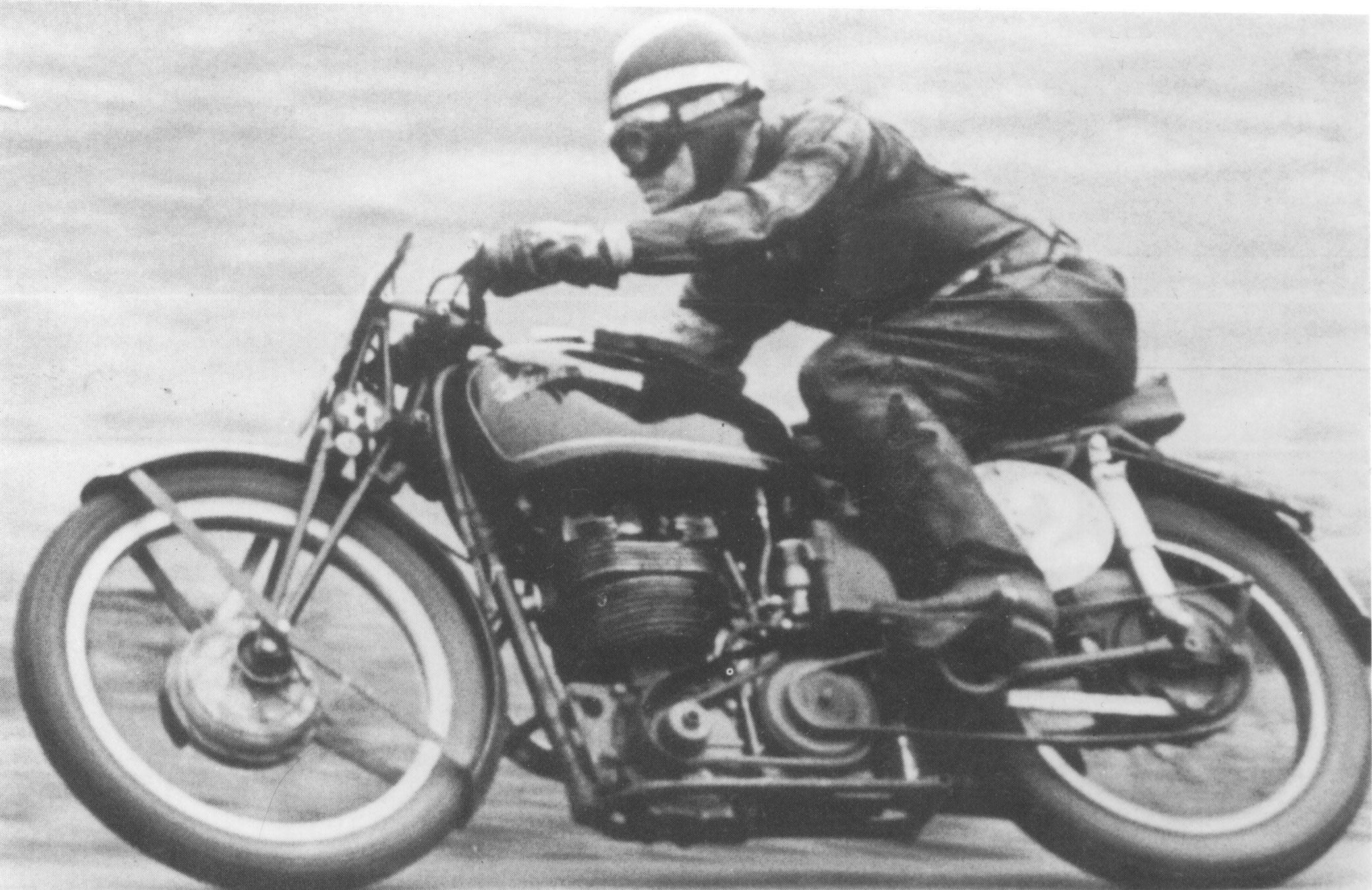
* The FICM European Grand Prix - which was to be the last one in history, as a single event – took place in Clady, near Belfast, under a dreadful weather and pouring rain. Freddie Frith won the 350cc race on his Official Velocette, Maurice Cann the 250cc on a Guzzi, and Enrico Lorenzetti the 500cc on a Guzzi.
* The British delegate, Mr Chamberlain, introduced the subject of the Motocross des Nations. Discussions ensued and everyone agreed that the number of countries participating should be increased, even by creating a “Grand Challenge” and a “Minor Challenge” (the Trophy of Nations would only see the light of day in 1961). A sub-committee was examining the draft regulations and presented the following report to the CSI for the events of 8 August 1948 in Spa, 1949 in Great Britain and on a rotation basis afterwards:
- Each competing nation would enter minimum five and maximum twelve riders.
- Fuel would be unrestricted except for a total ban on alcohol additives. Engine capacity would not exceed 500cc and supercharging was not permitted. The provisions of annex H in the international racing regulations would be generally applied.
- The event would be run in heats and a final and the total distance would not exceed 60 kilometres. The number and make-up of the heats would be left to a jury comprising a marshal from each country.
- Group starts would be made with the engine already running.
- The three best riders from each country would compete in the final. The field would be completed to a reasonable figure of, for example, 30, by other riders, irrespective of their nationality, who had achieved the best performance.
- The formula for establishing the results would be explained at a later date.
- The accommodation of visiting competitors to the organising country would be for the account of the country’s NMU.
- The organising country would undertake to draw up, publish and apply the additional regulations respecting the conditions laid out above and would take all necessary measures to make the event a success.
* The autumn congress took place in London from 25 to 27 November 1948 as usual on the premises of the RAC. Mr Haecker chaired the meeting.
* CSI President Nortier congratulated the Belgian Federation for both the organisation and victory in the Motocross des Nations held in Spa. The organisation of the event in 1949 was the responsibility of the ACU and set for 28 August.
* In the CSI, the decision was taken on the subject of the FICM European Grand Prix, to “discontinue holding an annual event, but to institute from 1949 onwards, annual motorcycle road racing world championships.” The regulations for the championships would be published on 14 January 1949 and the international sporting calendar for 1949 on 12 February 1949. So a Grand Prix Series was officially launched!
INSET:
Road Racing Grand Prix World Championship
Extract from the report written by the ISC secretary, Major T.W. Loughborough:
“The FICM will award the title of World Champion a) to the best rider and b) to the best constructor, in the classic road racing events of the year, in each of the recognised classes where are least three races have been held: 125cc, 250cc, 350cc, 500cc solo and 600cc side-car.
The minimum distances for the races in each of the various classes shall be: for the 125cc solo and the 600cc side-cars:100 kilometres; for the 250cc solo: 125 kilometres; for the 350cc solo: 150 kilometres; for the 500cc solo: 200 kilometres.
Classic road racing events for 1949 which comply with the conditions laid out above are:
1. The Tourist Trophy races, Isle of Man on 13, 15 and 17 June.
2. The Swiss Grand Prix, Berne, on 2 and 3 July.
3. The Dutch TT, Assen on 9 July.
4. The Belgian Grand Prix, Spa-Francorchamps on 17 July.
5. The Ulster Grand Prix, Belfast/Clady, on 21 August.
6. The Grand Prix of Nations, Monza, on 4 September.
No special registration is required for the championships and the titles will be awarded automatically according to the number of points obtained in each of the events, as follows: winner/10 points; 2nd place/8 points; 3rd place/7 points; 4th place/6 points; 5th place/5 points. Fastest lap recorded by a rider who finishes the race: 1 point.
Only the three best results in all the events will count.
Concerning the constructors’ championship, only the best placed machine for a particular make will score points. For example, if the 1st, 2nd and 3rd places in a race are won by machines from make “X”, the 4th place from make “Y”, make “X” will score 10 points and make “Y” 6 points.
In the event of a dead heat, the four best performances from all the events will count and then if necessary, the best five and then six performances. Should the number of races completed in a particular class be insufficient to calculate the result according to this method, then the times for the number of races in which the particular competitors have taken part, shall be added together.
If the results still remain equal the title will be awarded according to the FICM international sporting committee.
The individual Champion in each class will receive:
1. The title of FICM Champion.
2. The FICM Champion armband.
3. A certificate.
The constructors’ Champion in each class will receive a certificate.”
1949: The FICM becomes the FIM
* The board composed of Messrs Haecker, Pérouse, Nortier (ISC), Watling and Loughborough met on 6 April 1949 at the end of the afternoon at the Luxembourg casino.
* In terms of finances, details had to be given concerning the operational aspects of the Swiss franc account in Geneva. An increased budget was under preparation. Major Watling, the treasurer, explained that he had taken steps to purchase the trophies for the Six Days as replacements for the ones which had gone missing in Germany. The cost of the two silver trophies was 120 pounds – to be debited from Germany’s account.
* The revision of the statutes had already taken two years of work particularly for the secretary general and vice president Pérouse. The moment had now come to present the results:
Art 1. the name of the federation became the “Féderation Internationale Motocycliste” (International Motorcycling Federation) (to the regret of Mr Chamberlain – the disappearance of a name after half a century).
Art. 3: the abbreviation FMN (Fédération Motocycliste Nationale) (national motorcycling Federation) would henceforth replace the NMU (national motorcycling union), since it was more in line with the majority of names of national associations.
Art.11: representation by proxy was retained by a whisker: the deciding vote of president Haecker.
Art. 13: the order of the meetings would no longer be mentioned in the statutes, for example, the board the first day, the council the next, etc. But it would become a habit…
Art. 17: The tasks of the secretary general and the treasurer should be the subject of separate articles. The treasurer as mentioned above, should be elected every three years like the vice presidents. This parallel would be maintained in the future while the post of secretary general would be subject to a vote by the general council.
* It was suggested that Mr Pérouse should be responsible for editing the French version of these statutes. The official date for the statutes to come into effect was proposed as 1 January 1950, but a 2/3 majority thought it would be sooner.
* In spite of an offer from Mr Tuma, the Czech delegate (since Mr Rechziegal, an official FICM vice president, was absent), to hold the autumn congress in Prague, the council decided to organise its next meeting in Paris. Then, Don Barron and Rodil del Valle issued an invitation from the FME to hold the 1950 spring congress in Madrid. Mr Tuma confirmed that his invitation was also valid for the spring congress in Prague; the votes went 9 – 2 in favour of Spain.
* The CSI report mentions discussions concerning the international sporting code and each of its annexes. Appendix A covers the registration of drivers and passengers; from 1950 onwards annual international licences would be printed by the ISC and made available to the NMFs. Appendix B referred to the technical classification of motorcycles. Appendix C was concerned with world records, Appendix D, time-keepers and Appendix E the international sporting calendar. Appendix F was devoted to international road racing events with Appendix G dirt track races and Appendix H speedway (these two regulations were those of the ACU, in the process of being revised). Appendix J was very recent and had been compiled jointly by the Belgian and Dutch delegations; some small modifications were made and the question of the start (raise or lower the flag) was finally settled by a vote: the flag would be raised! Appendix K (mothball) was entrusted to the FFM and Appendix L covered the Six International Days. Finally Appendix M – road racing world championships – confirmed the conditions for awarding the title of World Champion published on 14 January 1949.
* The idea of the FICM International Rally was raised again but the idea of combining it with a racing event was abandoned, since the objectives were not the same. The Netherlands, the holders of the trophy from 1939 in Zurich, applied unofficially to host the event in 1950. New regulations would have to be compiled.
* At the autumn congress in November 1949, the FICM officially became the FIM. Nineteen countries were represented (the most in history at that time). Following a recent devaluation in the pound sterling, the capital had suffered a loss and the president reiterated that most of the transactions (calendar registration and membership fees) should be made in Swiss francs at the bank in Geneva with an exchange rate of 12 francs to the pound.
* A long discussion ensued on whether to re-admit Germany or not. A first vote determined by 13 votes to six that the procedure launched in Geneva in 1946 should be continued. A committee was entrusted with visiting Germany and making contact with active motorcycling clubs in order to draw up a report on the current situation.
* License problems were also discussed (Spaniards living in Tangiers, English in Gibraltar wanting to race in Spain, etc.).
* There was much talk concerning the spring congress. It was recalled that Madrid had been preferred to Prague but that the delegates from Hungary and Poland had had their visa requests refused by the Spanish government. The Polish delegate, Mr Better, launched into a political tirade and finished by saying that he could not go to Madrid and neither could the Czechs, the Hungarians or the Romanians…
* The first evaluation of the World Championship was made during the first session of the CSI. The president Peter Nortier emphasised that the Road Racing World Championships “were organised in compliance with the regulations laid down by the board and agreed in Luxembourg and, in terms of the interest shown by the general public for motorcycle races, the increased importance attached to great classic events or indeed the prestige that they brought to the FIM, they could be considered a great success”. Mr Nortier made a praise for the first World Champions (Nello Pagani, Bruno Ruffo, Freddie Frith, Leslie Graham and Eric Oliver/Denis Jenkinson), and informed the committee that “during the meeting recently held by the FIA (Fédération Internationale de l’Automobile), at which he represented the FIM the same commission had shown great interest for the way in which we organised our championships and proposed to adopt the same methods as ours in the world of automobile racing”. Remember that the Formula 1 World Championship started in 1950.
* The Commission then discussed the amendments that needed to be made for the 1950 Championship. Following the bureau’s recommendations, after a long discussion on the definition of the “fastest lap”, it was decided that points would no longer be awarded for the fastest lap. A new system was adopted: 8 for 1st, 6 for 2nd, 4 for 3rd, 3 for 4th, 2 for 5th and 1 for 6th (instead of 10, 8, 7, 6 and 5).
* Other problems were also discussed; racer registration (deadline of 31 March for the NMFs to send the FIM secretary general a list of their national racers whom they believed should be considered for the World Championship), the question of starting bonuses, often insufficient to cover the racers’ expenses. This was not a straightforward issue. At the Swiss Grand Prix for 36 starters there had been no less then 84 entry requests for the 500cc category. How could promoters be prevented from refusing riders, or paying starting bonuses, insufficient to cover their travel expenses? The selection of riders according to their performance during practice appeared the best criteria in spite of opposition from some, but habits were not the same in each country. It was also agreed that a classic event did not necessarily have to be held every year at the same track, but that, if, at a certain time, another track was selected, then this track should have been hosting races for a certain number of years previously and had to be approved by the commission or the bureau. The commission decided to forbid the staging of motorcycle and automobile classic events on the same day at the same circuit (which was quite common at the time, especially in France and Switzerland).
* The Six Days of regularity were then reviewed which had been held in Great Britain and won by Great Britain, then the Motocross des Nations, which had taken place in Brands Hatch on 28 August and which had also been won by the British team. For 1950, a fourth country joined the fray: Sweden. Three suggested amendments to the regulations were approved: only commercial fuel could be used, a rider could only use one bike for the event, and each team had one pit box, but the use of repair points along the route was not permitted.
* The tourism commission meeting began with the examination of proposals for rally regulations For 1950, the FIM rally was held on Saturday 8 July at the same time as the Dutch TT. The international Madonna dei Centauri rally was organised for the fourth time with great success one week later. Other international rallies on the calendar for 1950: Ghent (Belgium), Ettelbrück (Luxembourg).
Photos FIM Archives - Caption from top to bottom:
-1 Frith, 1949
-2 Daniell, 1949
-3 Leoni, 1949
-4 Pagani, 1949
-5 Ruffo, 1949
News
FIM History - Flash Back 1947-1949